80%
This affects not only the quality of communication, but also the mental and physical health of a person.
What will you learn?
Recognize manipulation
in communication with people. Be aware when someone is manipulating you and when you are manipulating others.
Transform manipulative relationships
into direct, open, and trusting relationships.
Change automatic reactions
Learn to achieve goals without manipulation.
These skills will help you achieve confidence and peace of mind when interacting with anyone.
How will it be?

Practical work with yourself
25 exercises that will help you learn new skills and change behavior.
Alexander will “guide” you through the practices as if you were doing them in his real training.
Understandable theory
5 video lessons lasting 12-29 minutes, in which Alexander Savkin talks about manipulation.
Homework after each lesson
5 homework assignments to help bring new tools to life
Comfortable pace of learning
It is up to you to decide at what speed the workshop takes place. The video is available for 2 months.
Example of an exercise from a workshop

We included 5 individual sessions with a coach in the workshop, and for this there are 3 reasons:
All in one place.
Video lectures, homework assignments, technical support and communication with the curator — all this on the GetCourse platform. You can study the material both from your computer and from the app on your phone and tablet.
How much does it cost?

Online workshop as a gift
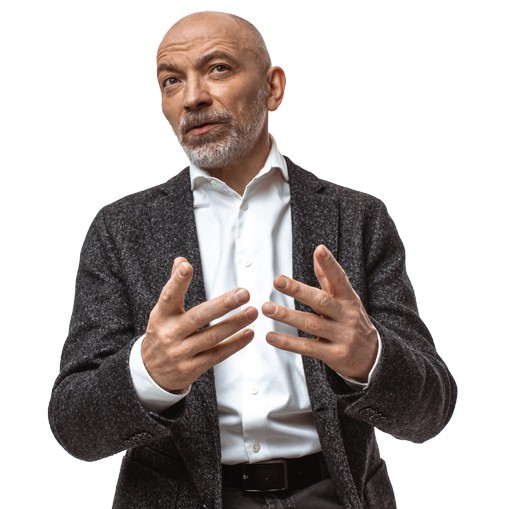
Author and facilitator — Alexander Savkin
Co-founder of the Coaching Institute and the Zemlya Stratega consulting company
Co-author of the books:
• Coaching in Russian — The Courage to Desire (2003)
• Integral Coaching: How to Teach and How to Learn (2020)
• The Shadow as a Resource (2021)
In counseling since 1994: experience of individual work more than 10,000 hours, and group work more than 5,500 hours
Certified Shadow Work® facilitator
Thanks to extensive experience, he helps the client to identify non-obvious, essential difficulties in 10–15 minutes and quickly solve the problem

Awareness of manipulation and the ability to resist it is psychological hygiene. This is a base that allows you to move towards goals and improve interaction with others. We have done everything to make your life better after the workshop. All you have to do is take advantage of this opportunity.
What’s included
in the program
Lesson 1. What manipulation is
- What manipulation is
- What signs and “signals” a manipulator uses to “recognize” their “victim”
- How manipulators use “strings of vulnerability”
- Examples of manipulation in personal relationships and in business
- Stephen Karpman’s social-psychological interaction model
- “Glass of water” — demonstrating key manipulation patterns in the “Karpman Triangle”
- Main roles in manipulation
- Identifying your own roles in manipulative interaction
Lesson 2. Causes and benefits of manipulation
- Why people manipulate
- 3 causes of manipulation
- The role of upbringing in developing manipulation skills
- The role of traumatic experience in manipulative behavior
- Fear of rejection and manipulation
- What we really want and fear when we manipulate others
- Possible losses from using manipulation
- How manipulation affects children
- When it is important to refuse manipulation
- Removing possible causes of manipulation between partners
- Benefits of giving up manipulation
- Small steps to reduce manipulation in communication
Lesson 3. How to recognize manipulation
- Why it matters to learn to recognize signs of manipulation
- 3 behavioral strategies in response to manipulation
- 2 principles that prevent a manipulator from pulling you into their game
- How to know someone has started manipulating you
- 7 signs of manipulation
- Practices for recognizing manipulative interaction in life and in films
Lesson 4. How to resist manipulation in the moment
- 8 ways to resist manipulation
- Why it matters to “cash out” hidden manipulation
- The language of facts — a path to turning manipulative relationships into direct, open, and trusting ones
- Why unaccepted weaknesses and flaws become targets for a manipulator
- Why it matters to put yourself first and not try to please everyone
- How help “without an agreement” relates to manipulation
- Basic psychological human rights
- Paul Linden and his research on embodiment, conflict resolution, and stress resilience
- Manipulation demonstration, analysis, and reflection
- Why transforming manipulative relationships requires contact with yourself and managing your state
- Developing awareness and the inner observer
Lesson 5. How to free yourself from “hot buttons”
- The origin of “hot buttons”
- Traumatic situations from childhood and adolescence
- How a subpersonality forms and is pushed into the shadow
- Carl Gustav Jung and Roberto Assagioli
- How to tune the “inner orchestra” and stop manipulating
- How one subpersonality activates in manipulation and “takes over” control
- The inner child as a key to true needs and desires
- How limiting beliefs and rules affect behavior in manipulation
- 2 life postulates whose acceptance blocks manipulations
Lesson 6. Bonus lesson on how shadow aspects of personality affect behavior in manipulation situations
Reviews
All That’s Left Is to Begin
Are you ready to work with yourself to give up manipulation and improve your relationships at work and at home? Choose a convenient training option – Light, Standard or VIP – and get started today.
Frequently asked questions
How is this course different from dozens of others?
This is not just a lecture course, but a full author’s workshop. We designed it so that after completing it you gain not only knowledge, but skills — and your habitual behavior changes. Besides theoretical lectures, this workshop includes:
- 25 exercises, some with video demos and guided by Alexander Savkin’s voice;
- homework after each lesson;
- 5 individual coach sessions to work through the material.
We did everything so that after the workshop your life and interactions with others improve. All you need is a clear intention to use this opportunity.
Can I extend access to the workshop beyond 2 months?
Yes, you can extend workshop access if you did not finish in time or want to return to the materials. Write to the workshop curator on GetCourse about your request.
Why do I need work with a coach?
If you truly want to change your behavior and gain new skills, watching videos alone is not enough. Yes, you will get new knowledge, but not skills.
A coach is also needed to:
- see in yourself and your behavior what you persistently miss;
- explore your individual set of “hot buttons” that people use by chance or on purpose, and the interaction patterns that kick in when you are afraid to speak directly;
- Work through rigid “buttons” and behavior patterns you cannot drop on your own.
Which coaches will accompany me?
In the Standart package you are accompanied by coaches of the Coaching Institute who completed the three-year program “Integral Technologies for Developing People and Organizations”. They attend supervision and psychotherapy, and each has more than 300 hours of individual practice. You will be in reliable hands!
In the VIP package you are accompanied by Alexander Savkin himself. He has been consulting since 1994. Individual practice: more than 10,000 hours; group work: more than 5,500 hours. Thanks to this, Alexander helps you quickly reach non-obvious, essential difficulties and solve the task — if you are ready for it.
Can Alexander Savkin himself accompany me?
Yes — if you choose the VIP package.
Can I take the workshop without individual coaching?
If you consider yourself disciplined and are sure you will complete all homework and practices on your own, there is a lighter option — the Light package.
What methodology is the workshop based on?
The workshop is based on the Coaching Institute’s author methodology and the integral approach. The methodology is described in the book by Marina Danilova, Alexander Savkin, and Yana Melville “Integral Coaching. How to Teach and How to Learn” (2020).
Integral coaching focuses on holistic change in a person’s way of life and transformation. This approach is needed in personal crisis, when circumstances require surpassing yourself in a short time, and in cases that demand a shift in the logic of action.
What other online workshops by Alexander Savkin can I take?
Alexander Savkin also has the author workshop “How to Find Your True Purpose”. In that workshop you will learn how to find, among countless goals, those that fill life with joy, energy, and meaning.